
Welcome to the Air Pollution Recovery Indicators (APRI) Project homepage.
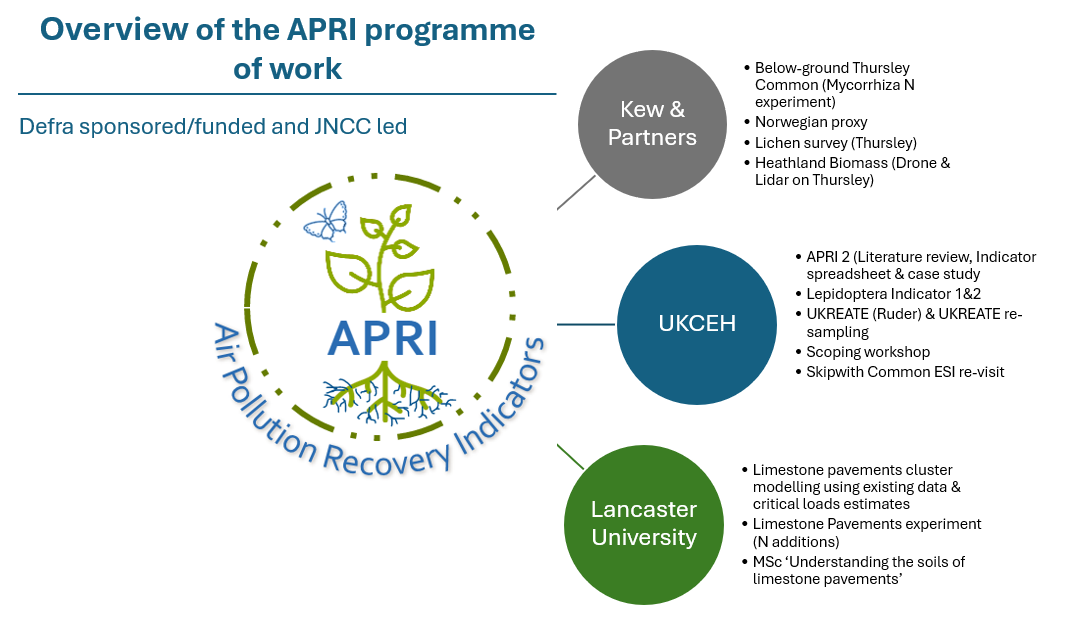
Download the JPG version of the Overview (please note this may not be fully accessible for users of assistive technology).
Project objectives
The objective of this collaborative project is to share expertise and support each other through the partnership to deliver new scientific research relating to air pollution with potential for developing an indicator or set of indicators for ecosystem and species recovery.
Project time series




Project details
Many UK protected/sensitive habitats are in exceedance of critical loads for nutrient Nitrogen. For additional information see the latest Air Pollution Trends Report. Much is known about damaging effects of air pollution on ecosystems and their function. Recovery of habitats and wildlife populations reliant on those ecosystems is much less well understood. This project will aim to address this gap in knowledge.
Phase 1 - Below-ground
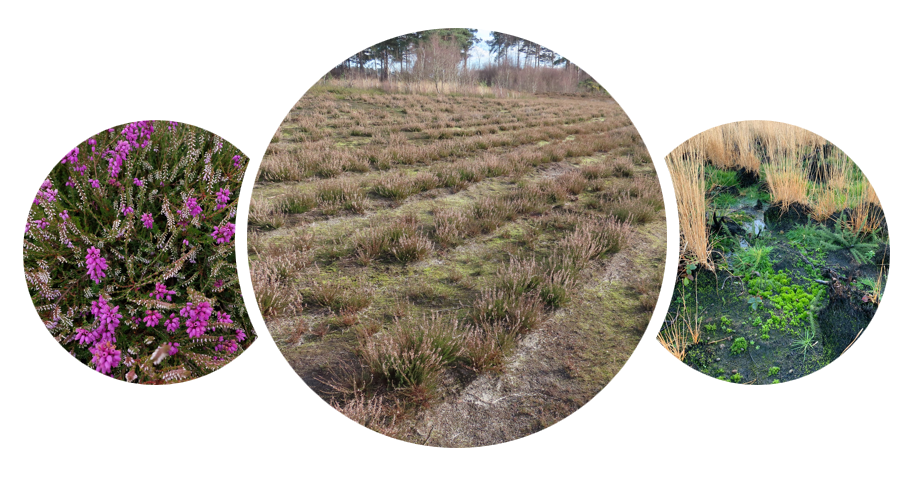
Phase 1 of the project, in collaboration with project partners from Royal Botanic Gardens Kew, the Natural History Museum (NHM) and Imperial College London will explore below-ground aspects such as soil and soil flora and fauna characteristics, including plant-fungal interactions and how they recover from the effects from nitrogen pollution.
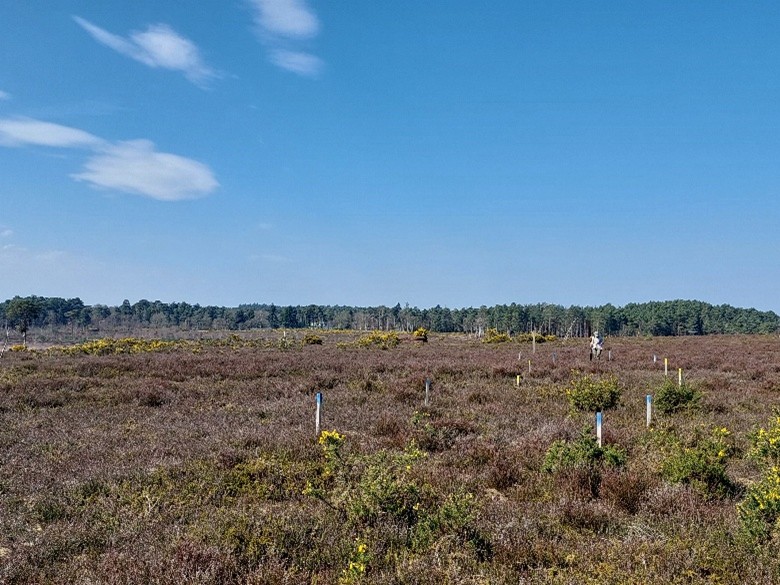
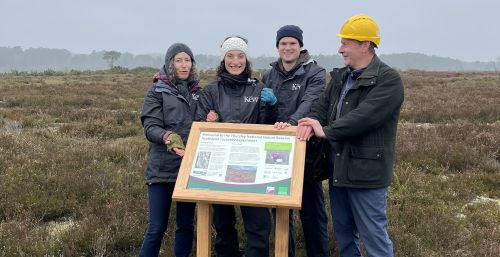
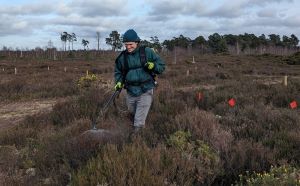
Thirty new experimental plots at have been established at Thursley Common National Nature Reserve (NNR). Background nitrogen deposition will be enhanced by adding a nitrogen-based fertiliser in a series of initial pulses. After each fertiliser addition, changes in the ecosystem will be monitored by testing belowground processes (e.g. soil chemistry, fungal community composition, ErM physiology) alongside well-established aboveground indicators (e.g. vegetation physiology, plant chemistry, bryophyte, and lichen cover).
Phase 2 - Above-ground
Further work commissioned under the APRI project in October 2023 looked to develop:
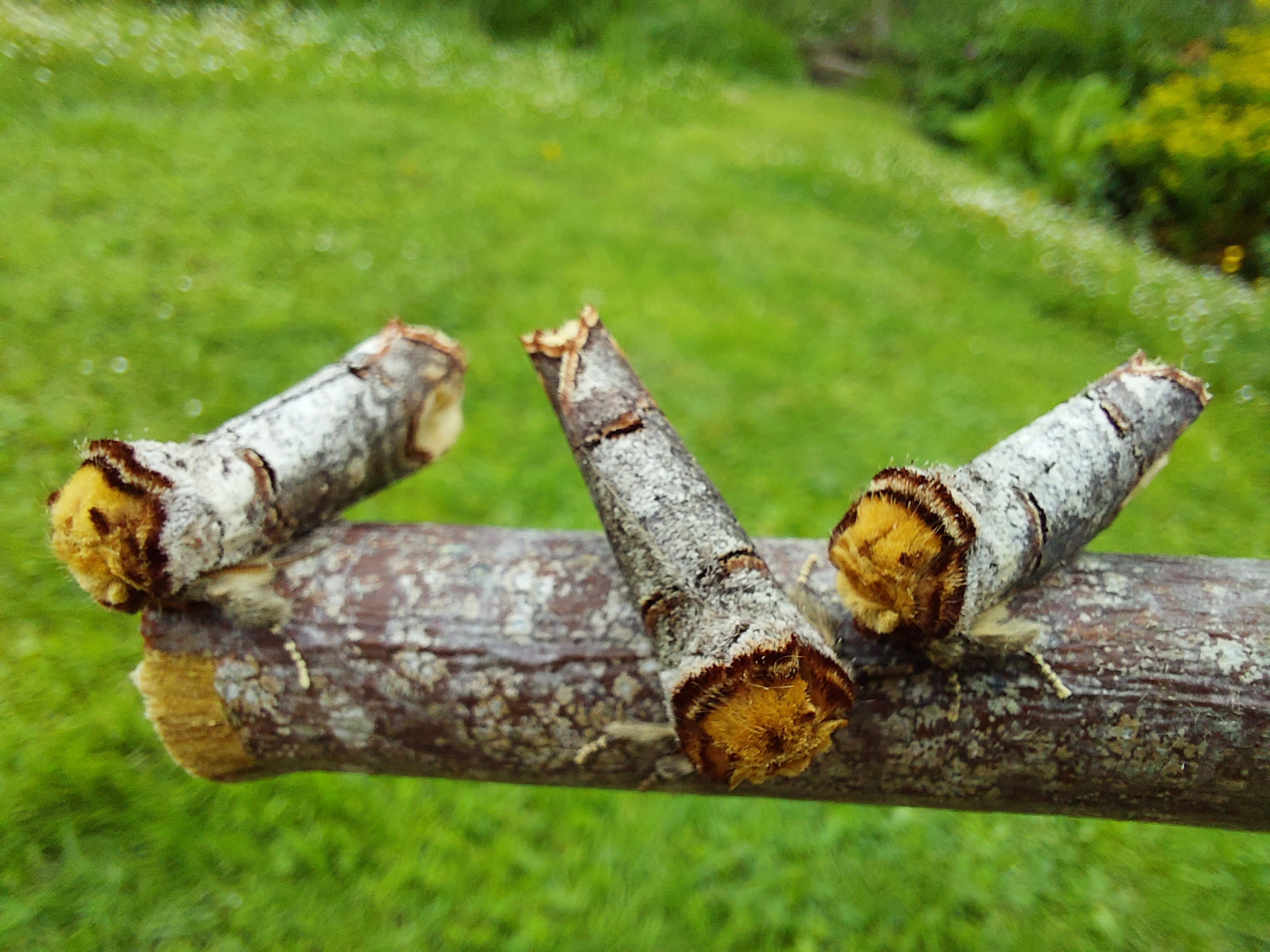
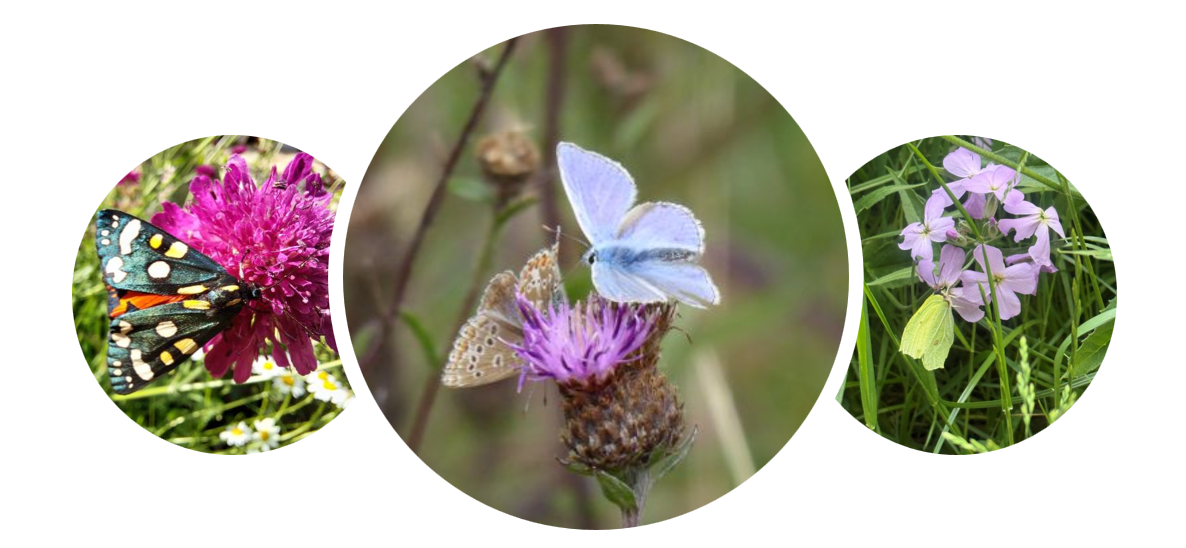
- a high-level overview of impacts of nitrogen Deposition on butterflies and/or moths;
- an air pollution recovery indicator for butterfly and/or moth species in the UK based on existing survey data.
Work was undertaken to better understand the potential effects of atmospheric nitrogen (N) pollution upon butterflies and moths (Lepidoptera) in the UK. Data from long-term monitoring schemes was used to understand the potential effects of N upon individual Lepidoptera species, including summary metrics such as community richness, and within- trait groupings. A spatio-temporal Generalised Additive Modelling (GAM) approach was adopted to test the response of each variable to N, whilst also accounting for other important drivers of change in Lepidoptera. The full report can be accessed via the sidebar links or the reports section further down this page.
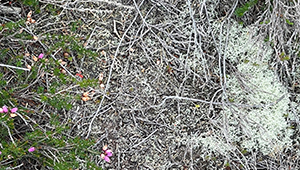
Additional above-ground work commenced on Thursley common in late 2024 involving a comprehensive survey on the 2020-fire plots to examine how long before lichen communities begin to recover post-fire and the effect of atmospheric N on community composition. A carbon calculation method will be developed for heathland which includes below and aboveground measurements.
New work under APRI
The Air Pollution Recovery Indicators (APRI) project continues to expand with new research and monitoring initiatives aimed at understanding recovery from nitrogen and sulphur pollution across UK habitats. Current work includes:
* UK Research on the Eutrophication and Acidification of Terrestrial Environments (UKREATE)
For information on the resampling of the UKREATE sites please see the Related work section.
Stakeholder engagement
JNCC is keen to liaise with any stakeholders who have an interest in this project and will look to run engagement events throughout the project lifetime.
If you want to receive project updates and/or be involved in future project discussions and events, please register your interest.
European Heathlands workshop
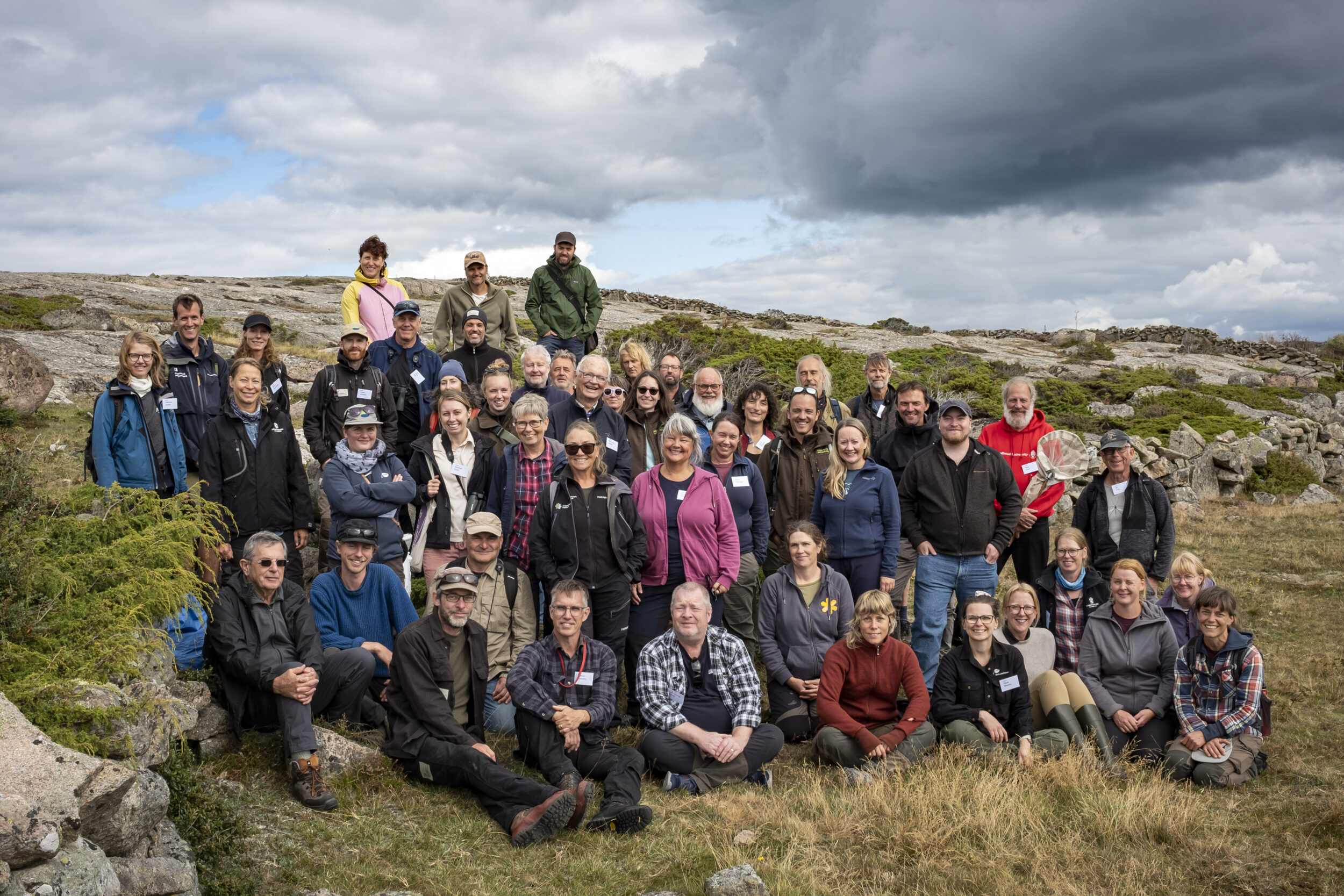
As part of our commitment to collaborative research and knowledge exchange, Kew participated in the 18th European Heathlands Workshop (EHW 2025), Sweden, 17-22 August. The theme for the workshop was Small-Scale Strategies for Big Impact in Heathland Management, inviting participants to reflect on the power of scale, the richness of biodiversity, and the value of unconventional approaches in shaping vibrant and resilient heathland landscapes.
Participants shared examples and ongoing experiments in heathland restoration and management. Beyond field visits and presentations, it was a unique opportunity to exchange experiences and spark new collaborations.
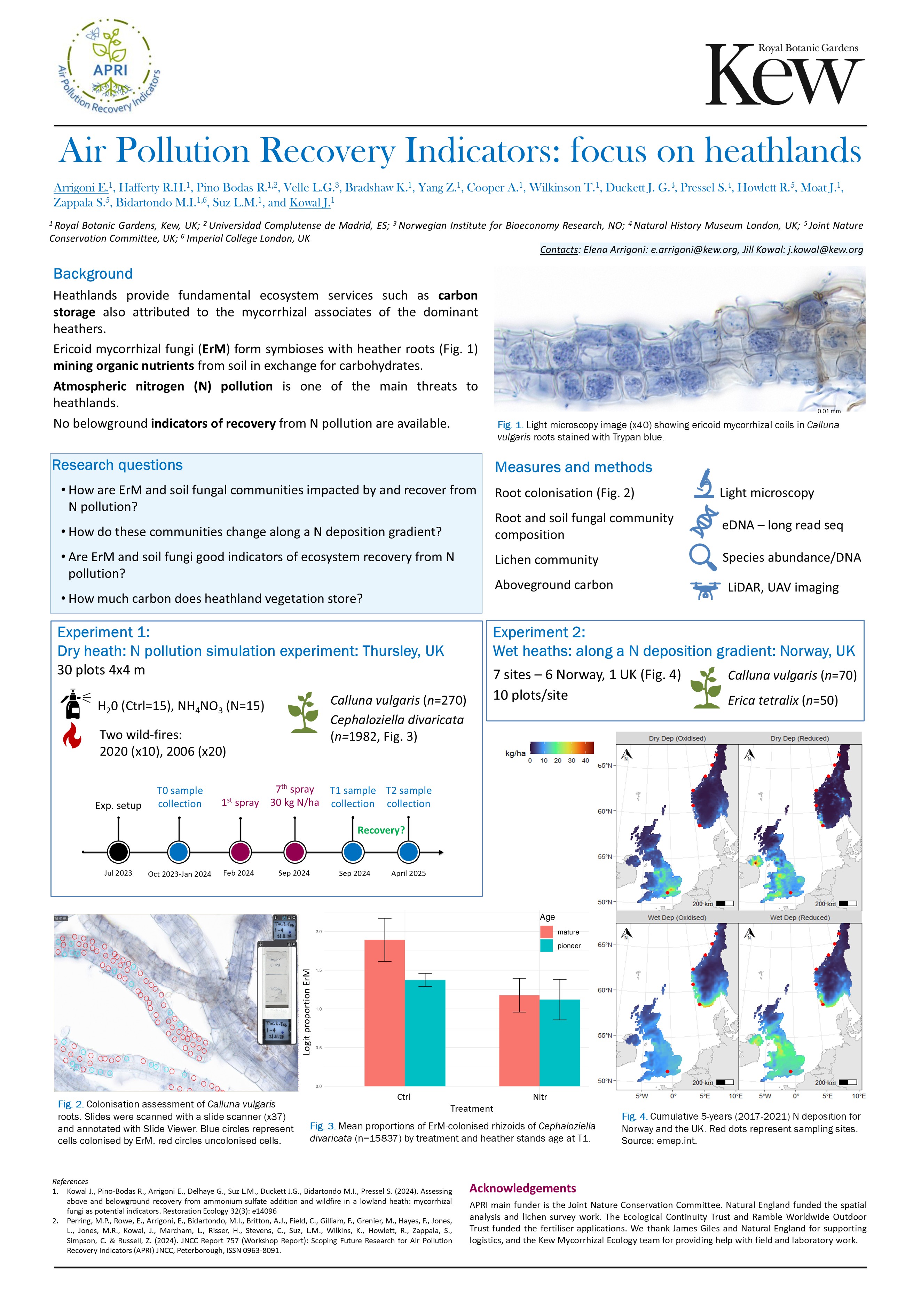
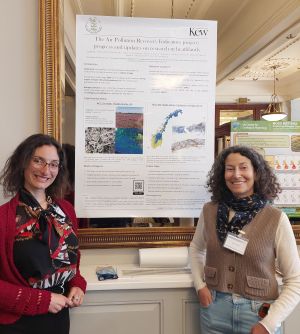
Poster presented by Kew at the workshop.
Download the JPG version of the Poster (please note this may not be fully accessible for users of assistive technology).
Further information on the workshop is available here:
Norway Expedition
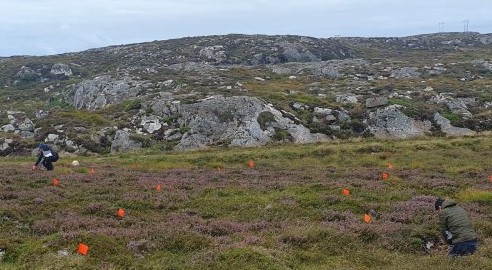
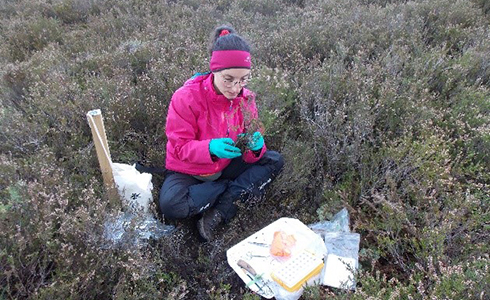
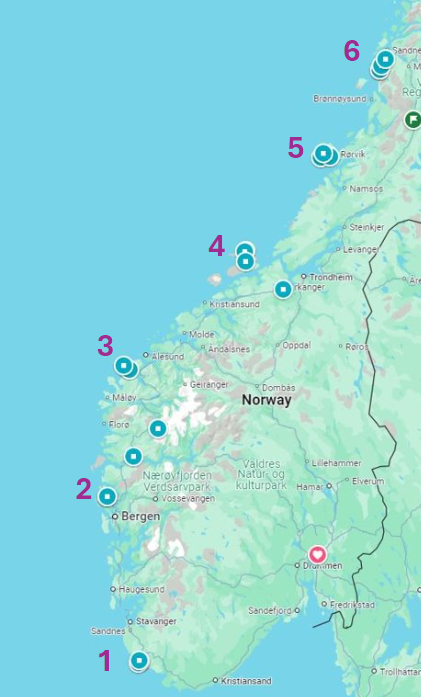
During August 2024, project partners at Royal Botanical Gardens Kew and Natural History Museum, in collaboration with the Norwegian Institute of Bioeconomy Research (NIBIO), visited six heathland sites along the coast of Norway to collect plant and soil samples to be compared with those from Thursley Common, Surrey.
The comparison will enable the team to investigate how heathlands in low-polluted areas look belowground, as there are no lowland heathlands below the critical load for nitrogen in the UK.
Additional samples from the wet heath at Thursley Common have also be collected as this aligns more closely with the samples collected in Norway.
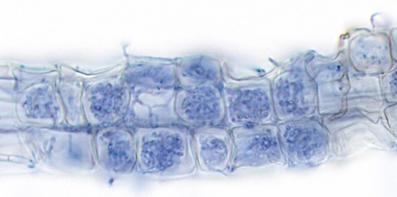
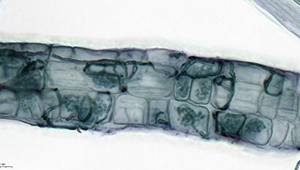
Microscope image showing mycorrhizal fungi colonising heather root.
Project Scoping Workshop
A project workshop was held at RBG Kew in the Herbarium on 7 and 8 November 2023. The project team were joined by a range of stakeholders from the UK, Canada, the Netherlands, and Ireland, with expertise in air pollution and ecosystems. Similar projects looking at recovery from nitrogen pollution were identified and discussions took place around the following questions:
- What constitutes species/habitat recovery in an era of multiple stressors?
- Is the type of pressure from nitrogen (ammonia concentration, N deposition, etc.) important?
- Where can we get good evidence to help understand damage and recovery? Beyond the UK?
- What would make a good recovery indicator and why?
A report of the workshop has been published and is available on JNCC's Resource Hub.
Thursley Common site visit
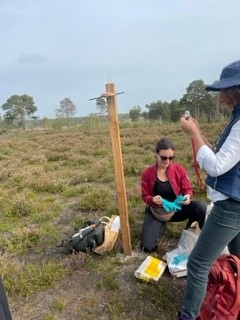
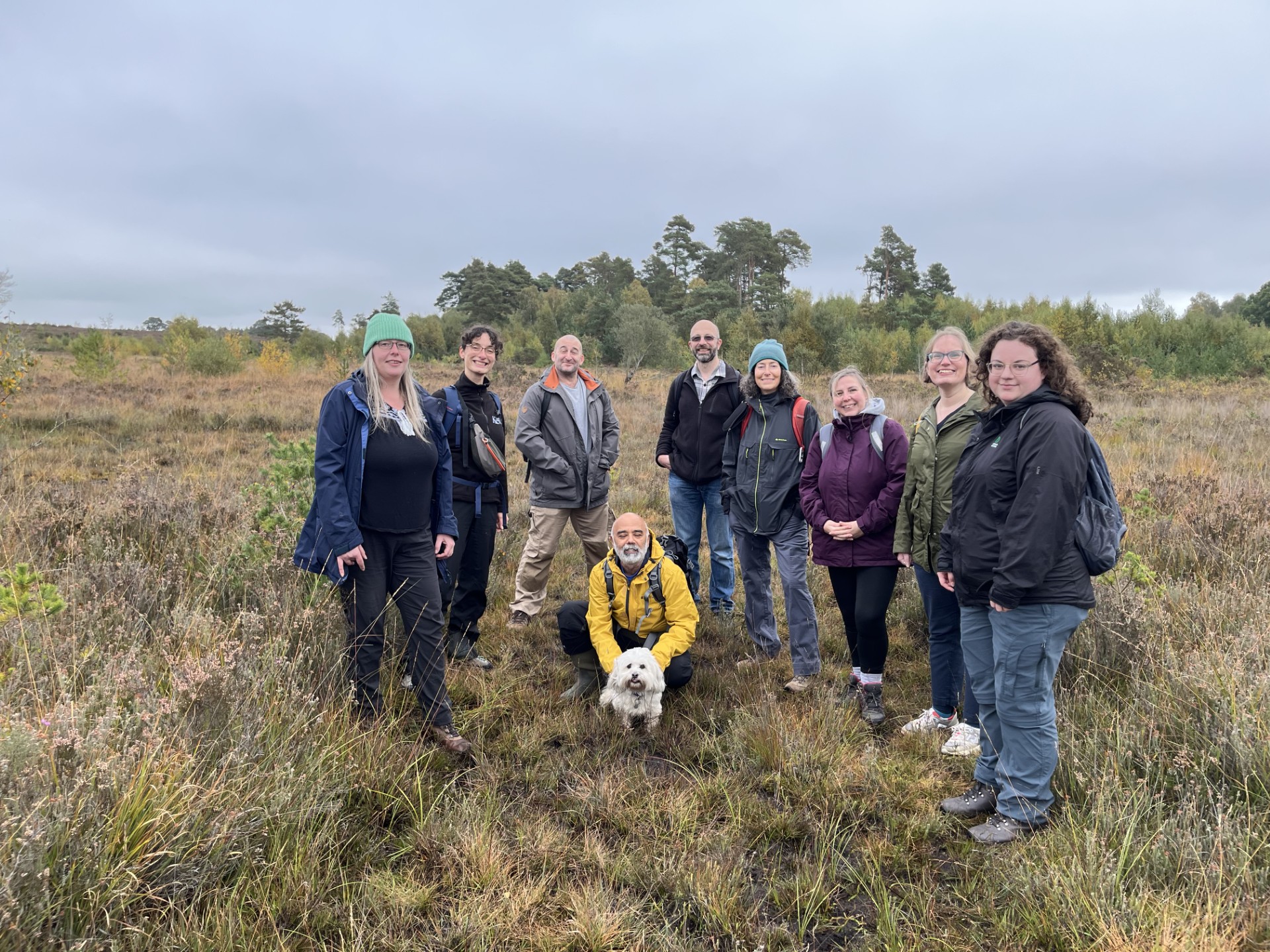
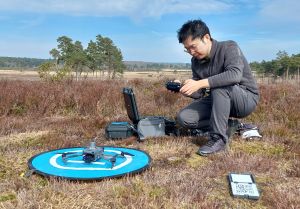
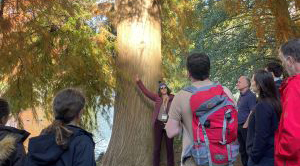
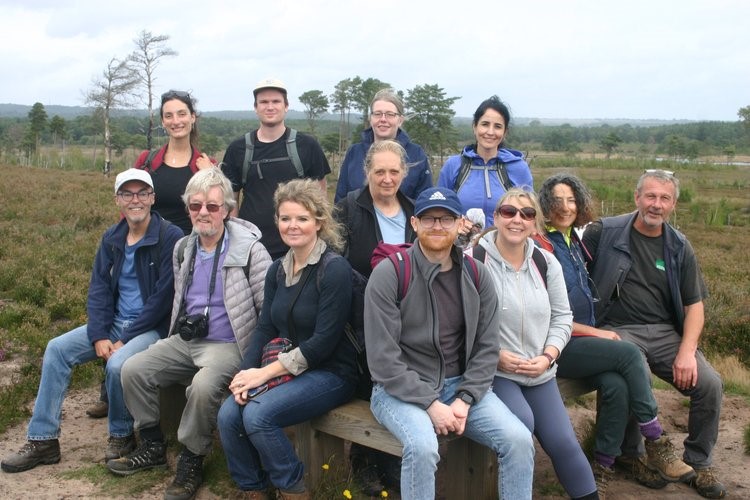
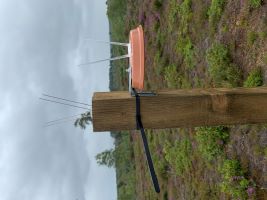
The project team were joined on site by stakeholders from Defra, Natural England and the Ecological Continuity Trust on the 28th September 2023. They were shown prior long-term experimental plots, newly established ones and area's of the site impacted by wildfires. They witnessed the alpha samplers in action and were briefed on the project aims, objectives, timelines and experimental design plans.
Project partners
Project reports
Air Pollution Recovery Indicators (APRI): Development of a Butterfly/Moth Indicator
Scoping Future Research for Air Pollution Recovery Indicators (APRI) (Workshop Report)
Related work
Development and testing of indicators across key habitats
Evidence is emerging from sites where experimental nitrogen addition has ceased, but there are limited formal outputs to date. This project, funded by Natural England, and led by UKCEH will work with a consortium of experts to develop a useable, consistent suite of indicators to assess recovery from atmospheric nitrogen pollution for different habitat types. It will review data from past experiments looking at recovery from nitrogen, producing a spreadsheet of indicators and evidence gaps for key habitat types. A guidance document of how to apply these will also be produced. A workshop in Spring 2025 will scope future work, including further experiments to test these indicators.
Resampling the former UKREATE experiments
To increase evidence around recovery indicator properties, Defra have directly funded a winter 2026 project to resample former N deposition experiments in heathland and grassland habitats. Led by UKCEH, this work aims to collect soil, litter and/or moss samples for subsequent processing. Fresh soil will be analysed at UKCEH and James Hutton Institute laboratories to allow testing of potential recovery indicators, including soil pH and extractable N. Both laboratories will also process samples to provide fresh frozen and dried archives which could be a foundation for future analyses e.g. on enzymes, and tissue and/or soil nutrient concentrations
Published: .